Thursday, August 16, 2012

Huntington Harbour


Huntington Harbour
Huntington Harbor and Sunset Beach
Approaching Peter's Landing Marina
We Made It Under The Bridge!
We departed Catalina Island on August 13th and motored northeast across San Pedro Channel to Peter’s Landing Marina tucked inside Huntington Harbor, accessed via Anaheim Bay.  To enter Huntington Harbour, boaters pass by the Seal Beach Naval Weapons Station and under a Coast Highway bridge with a vertical clearance between 22 feet and 28 feet, depending on the tide.  We lowered the antennas on our pilot house and made it under the bridge with 1-2 feet to spare.  Huntington Harbour consists of five manmade islands with a residential development along its waterways.  We’ve been told that a boat parade takes place during December through the waterways, and tour boats also cruise through the canals viewing decorated homes as a fundraiser.  Huntington Harbour was formed in the 1960s on the former site of the historic Sunset Bay Estuary wetland’s, thankfully, birds still frequent the harbor and two wetlands border the area - the Anaheim Bay National Wildlife Refuge to the north and the Bolsa Chica Ecological Reserve to the south.  In addition to the interesting waterways, beautiful Sunset Beach is just across the highway from the marina.  Sunset Beach lies north of the more famous Huntington Beach and Newport Beach - taken together these beaches offer miles of seemly endless sandy coastline.  Cafes, coffee shops, and marine supplies are also within easy walking distance of Peter’s Landing Marina, making it a nice choice for boaters.  The marina mainly provides permanent moorage with only a few transient guest spaces so we’re glad we called ahead to reserve a space.  Peter’s Landing will be our home-base while we tour the area and take care of some maintenance issues as noted in a previous blog.

Peter's Landing Marina
Homes along the Canal
Homes along Sunset Beach
Sunset Beach
Water Tower Beach-House Rental

Tuesday, August 14, 2012

The Catalina Casino


Catalina Casino


Promenade to Catalina Casino
Casino Theatre and Ballroom at Avalon
Grand Architecture
During our stay at Avalon, we toured the historic Catalina Casino.  When William Wrigley Jr. (the chewing-gum magnate and owner of the Chicago Cubs) purchased the majority of Catalina, he built not only a ranch for himself but built the Sugarloaf Casino which served as a ballroom and Avalon’s first high-school.  It quickly proved to be too small for the Island's growing population so he had the old building raised to be replaced with a grander structure.  The new Catalina Casino, completed in 1929, is of the Art Deco and Mediterranean Revival style and was the first to be designed specifically for movies with sound.  The circular structure is surrounded by sea on three sides and is the equivalent of 12 stories.  The theatre has one screen and a seating capacity of 1,154 patrons with a circular domed ceiling known for its remarkable acoustics.  The theatre is so well insulated that patrons cannot hear a band playing above or thousands of dancers on the ballroom floor.  Our tour included the beautiful foyer and theatre on the ground level, then a walk up the circular ramp to the enormous dancehall.  It is the world’s largest circular ballroom with a 180-foot diameter dance floor that can hold over 6,000 people.  French doors encircle the room and the balcony views over the bay are spectacular.  The Casino is still used as a theatre for the latest movies and as a dancehall for private functions and special events.  The original 4-manuel, 16 rank pipe organ remains in the theatre.  We also visited the Casino Museum located in the basement, highlighting the life and times of William Wrigley Jr.

Art Deco Style
Balcony Walk-About
Mediterranean Architecture
Art Deco Theatre

Catalina’s Famous Avalon


Avalon Bay - Catalina Island
Tight Moorage at Avalon Bay
Avalon Bay
Village of Avalon and Catalina Casino 
Condos near Avalon - Catalina Island
After spending three nights at Two Harbors, we motored south along Catalina’s mountainous coast, arriving at the famous resort village of Avalon around 11am.  We repeated the procedure for a mooring buoy, but this time with the added challenge of much tighter quarters.  Several rows of buoys follow the curved shape of the bay with a narrow channel between each row; add in factors like the wind, people kayaking, dinghies running around, and boats coming and going, it gets pretty interesting!  The Harbor Patrol assigned us to buoy number W25; but before we could get there, another boat pulled into the same spot – that was ok with us since the space was better suited for a smaller boat.  We flagged down another patrol boat and asked if we could take buoy no. W23 since someone had taken our previously assigned spot.  He gave us the go ahead and noted the change – patrol boats certainly keep busy checking buoys and collecting fees!  Catalina became a prime tourist destination in the 20th century with Avalon as its commercial hub.  In 1846 the Mexican Governor gave Catalina as a land grant to sea captain Robbins and the Island became part of the state of California in 1848.  The Island had several owners and for many years was owned by the Wrigley Family, who operated a sheep, cattle, and horse ranch.  Today, the Island is largely owned and managed by the Santa Catalina Island Conservancy, which acts as steward for its lands through a balance of conservation, education, and recreation.  Boaters moored at Avalon use the water taxi service to go ashore or they can bring their own dinghy into shore and tie-up at the busy dinghy dock – we used both options during our 2-day stay.  The village of Avalon is filled with boutiques of all kinds along with various restaurants, cafes, and coffee shops - Leonard even found a Catalina T-shirt for his souvenir; yes, he seems to have become the shopper!  Activities at Avalon include both land tours and water sports like para-sailing and glass-bottom boat tours plus the ever popular sandy beaches.  The most recognizable landmark at Avalon is the Catalina Casino, a historic movie house and dancehall – more about that in a later blog.  In the heyday of the 1930’s, Catalina Island was a popular getaway for Hollywood stars like Clark Gable and other notable actors.  It is interesting to note that Marilyn Monroe lived on Catalina Island for a period of time.  Many films and movies have been shot at Catalina locations beginning in 1920 to the present.  In 1924, fourteen bison were brought to the Island for filming of the silent movie “The Vanishing American.”  Scenes of the bison were cut from the final production and because of cost overruns, the film company decided to leave the American Bison on the Island – today the herd’s population is maintained at 150 animals.  Plants and animals that are endemic to the Island include the Catalina Manzanita, two species of mice, a special species of squirrel, the Ornate Shrew, and the Island Fox.
Busy Beaches at Avalon

Community of Avalon
Negotiating the Busy Dinghy Dock

Friday, August 10, 2012

Relaxation on Catalina Island


Isthmus Cove - Catalina Island
A Busy Day at the Dinghy Dock
Isthmus Cove
Mooring System
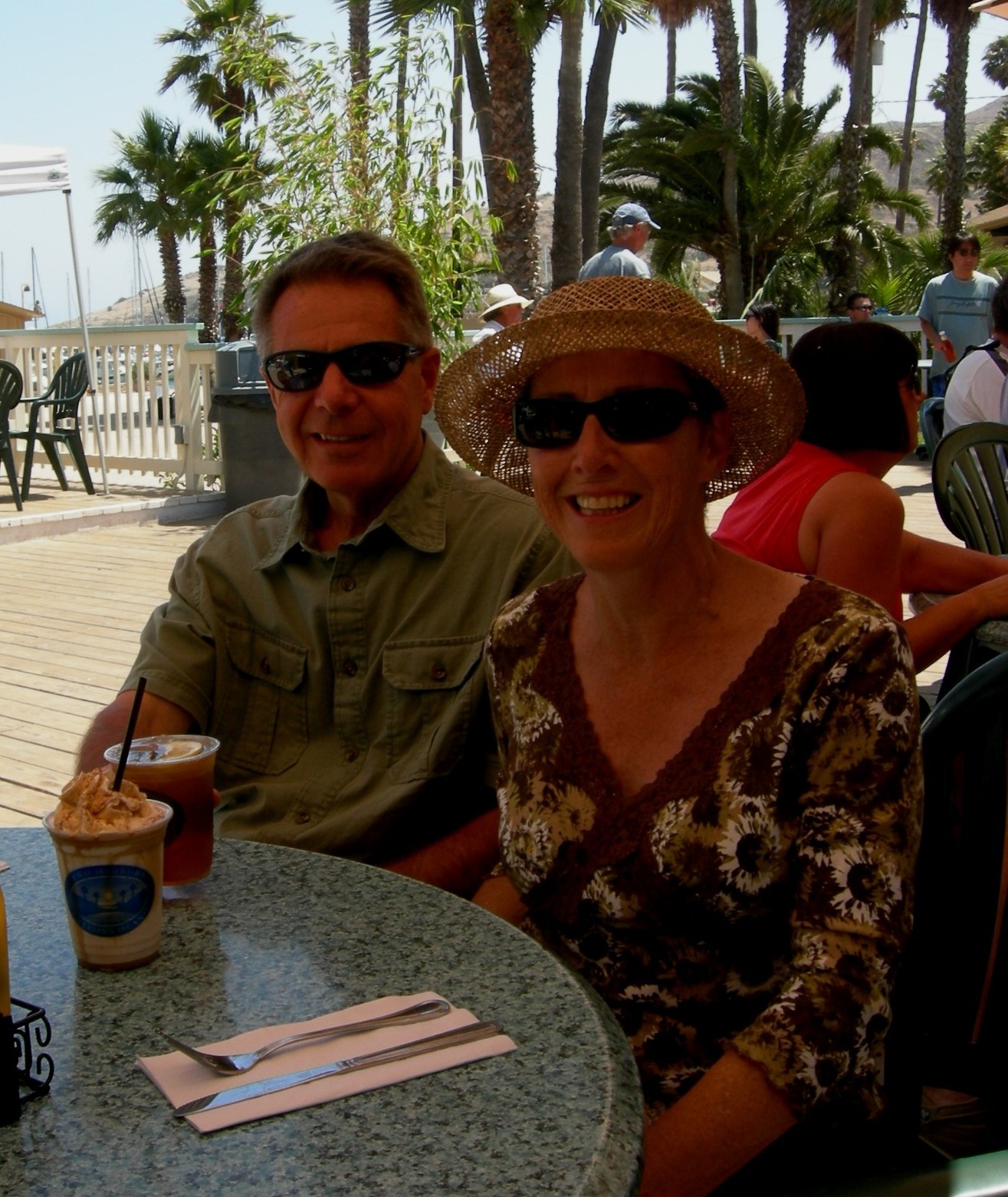
After arriving late in the afternoon at the village of Two Harbors on Catalina Island, we were faced with the task of dealing with a different mooring system and the hectic procedure for buoy assignments.  Catalina Island is the most developed of the Channel Islands and is a popular destination for boaters seeking a “relaxing vacation.”  However, the term “relaxation” depends on your perspective.  Weekend crowds from the greater Los Angeles area arrive in droves and there are over 700 mooring buoys for boaters.  To provide as much space as possible for the large number of boats, a buoy system is used to keep vessels in a straight line position rather than swinging around the buoy on a fixed point.  Reservations for these buoys are on a limited basis so moorings are usually on a first-come, first-serve basis.  Upon arrival, boaters contact the Harbor Master on VHF channel 9 indicating which cove they prefer for moorage; the Harbor Patrol gives you your mooring assignment and meets you in the mooring area.  There are so many boats coming and going that the radio channel has a constant chatter of communication; reminiscent of the air traffic controllers at the famous Oshkosh fly-in.  We were assigned to buoy number 7 on row O and proceeded in, only to find that a boat had already tied up to this buoy, perhaps unaware of the procedure.  We were then assigned to buoy No. 10 on the same row – Leonard maneuvered the boat close to the buoy and I leaned over the rail and grabbed the “pick-up pole.”  With Leonard’s help, we lifted the pole up and onto the bow; we then put the loop end of the line through the hawse, over the bow cleat; the spreader line is then walked back to the stern of the boat and the other loop end is attached to the stern cleat and secured.  It is important to have proper tension on the loop lines; it takes lots of energy to pull them taunt due to wave surges, wind, and current, plus there are heavy weights attached to the spreader line.  The Harbor Patrol boat helps by pulling your vessel backwards, creating slack in the spreader line, making it easier to haul up the loop end for proper tension before securing it to the stern cleat.  Once the two loop ends are secured to the boat, the spreader line is dropped back into the water.  We were successful making it through the process, however we did learn a couple of things that weren’t included on the  instruction sheet – wear gloves to protect your hands from barnacles, and be careful handling the spreader line so as not to hit your boat with the small heavy lead weights!  To make things easier at departure, we added our own line for easy release from the stern moorage line.  The following day we enjoyed our time "relaxing" with some refreshing drinks and a tasty lunch under the palm trees in the village of Two Harbors at Isthmus Cove.  The other part of Two Harbors is Catalina Harbor, a short walk across a narrow isthmus to the other side of the Island.  We found Catalina Harbor to be less crowded and very pretty, caressed by dry arid mountains peppered with cactus.


Buoy and Pick-up Pole
Mooring Line attached to Bow Cleat (pick-up pole on bow)


Mooring line attached to Stern Cleat


Catalina Harbor

Jurassic Park?


Anacapa Island
Anacapa Island
As we continued southeast through the Channel Islands, the water turned a beautiful turquoise blue.  The mountains on Anacapa Island seem to rise steeply from the ocean floor and reminded us of a dramatic island scene in “Jurassic Park.”  Cruising between the islands of Santa Cruz and Anacapa via the Anacapa Passage gave us the thrill of a lifetime.  I stepped out from the pilothouse door and saw a large white figure moving forward alongside the boat.  With my camera in-hand, I rushed to the bow and realized it was a Blue Whale riding the wake produced from our boat.  Turning and rolling, he rose out of the water a couple of times and then disappeared.  Leonard was down in the engine room so had missed the spectacle; but shortly thereafter, a pod of dolphins came to see us.  They too rode through the wake of our bow, diving, rolling, and rising out of the water to take a peak at the mother ship and the strange humans peering over the edge.  They played alongside for several minutes and then left, perhaps to join their friends who were off in the distance performing summersaults over the water.  What a show!  We looked back toward Anacapa Island and could see from afar the large 40-foot high rock arch, a favorite subject for many photographers.  As the northern Channel Islands faded in the distance, we settled in for the long 9-hour cruise to Catalina Island - no land in sight, just the beautiful blue sea.  Over the course of our cruise, Leonard checked the fuel injection pump to see if diesel was leaking from the “weep hole,” hopeful that the earlier fix was successful.  After a number of visits to the engine room, Leonard came back with the bad news.  “Houston, we have a problem.”  He had confirmed that a small amount of diesel fuel was still weeping which meant the earlier plug solution was not the right solution!  Looks like our visit to Catalina might be shorter than anticipated.  We arrived at the village of Two Harbors in Isthmus Cove on Catalina Island around 5:30pm with the plan to stay for three or four days and then head east to the greater Los Angeles area to begin our repair and maintenance issues once again.

Blue Whale
Dolphin
Fast Moving Dolphin
Playful Dolphins

Thursday, August 9, 2012

Return to Channel Islands


Santa Cruz Island

Prisoners Harbor
Historic Farm Building - Prisoners Harbor
We left Santa Barbara August 8th at 9:30am with only 2-3 foot swells that increased later to 4-6 foot swells striking us abeam with 15-20 knot winds – one of those “not as advertised forecasts;” but what the heck, we’ve had worse.  We headed south across the Santa Barbara Channel, all systems go, and arrived at 11:30am in Prisoners Harbor on Santa Cruz Island.  Santa Cruz is the largest of the Channel Islands and is one of several that make up the Channel Islands National Park.  Numerous trails traverse the Island and a road used by tour operators leads from Prisoners Harbor to an access trail for a primitive campground.  We took our kayaks ashore and walked part way up the graveled road, stopping at several overlooks that provide great views of the Harbor.  The island is rich in cultural history with over 10,000 years of American Indian habitation.  It is estimated that 2,000 Chumash natives lived on the Island when Spanish explorer Juan Rodriguez Cabrillo arrived in 1542.  Like other islands in the National Park, Santa Cruz is home to unique species of plants, birds, and animals such as the Island Scrub Jay.  The tiny 4-pound Santa Cruz Island fox is found nowhere else in the world and the rare yellow & white Silver Lotus flower is found only on Santa Cruz Island.  We departed Prisoners Harbor the following morning and motored along the Island’s shoreline to admire the many sea caves, impressive cliffs, grass covered plateaus, and mountains.  On our way south, we passed Scorpion Ranch, one of several historic buildings on the Island, including another at Prisoners Harbor, that remain from the ranching era of the late 1800’s, early 1900’s.


Prisoners Harbor seen from Road Overlook
Island Road
Silver Lotus Flower
Picture of Island Fox
Got d' Fever in Prisoners Harbor
Sunrise over Santa Cruz Island
Coastline - Santa Cruz Island

Tuesday, August 7, 2012

Work, Work, Work!


Leonard Varnishing Cap Rails
Good Looking Cap Rails (masking protects fiberglass while working)
Fuel Injection Pump - port engine
Plug under Fuel Injection Pump
Plug Needing Reset and Sealed
Heading back from Grocery Shopping
Ok, I know it looks like we have been enjoying ourselves and seeing lots of wonderful places but boating also comes with its share of routine maintenance and unexpected challenges.  After coming into port, for example, we routinely wash down the boat to eliminate the buildup of salt and then there’s the big job of waxing the fiberglass every 6-months to protect it from the sun’s UV rays.  Regular oil changes for the two John Deere engines are completed every 200 hours along with changing the fuel filters and cleaning out the sea strainers, plus an oil change is needed for the Genset.  The transmission fluid filters are changed every 300 hours.  Not to be forgotten are the zincs attached to the underside of the boat to prevent electrolysis from eating functional metal parts on the boat – these zincs need to be replaced as they wear down.  We have a total of nine zincs on our boat which usually need to be replaced about every 3-6 months plus two zincs for each engine’s heat exchanger for the coolant. To prevent barnacles from attaching themselves on the underside of the boat, bottom paint is applied every 1-2 years requiring a haul out at a boat yard.  Perhaps the most gratifying but most temperamental project for boaters is keeping the exterior wood looking shiny and new.  During our stay in Santa Barbara, Leonard worked on sanding and varnishing the wood cap rails on our boat.  It can be a frustrating exercise; but also rewarding when you get it right.  Varnish needs to be at the correct consistency and a good quality brush needs be used at all times or you will end up with wrinkles.  (Too bad I can't sand and varnish my face, ha).  Oh, did I mention the sanding and varnishing routine needs to be repeated at least 6-9 times!  And in weather that’s not too hot or too cold.  In addition to routine boat maintenance, the unexpected often comes along.  One day while checking out the engine room, Leonard noticed that the fuel injection pump for the port engine was weeping a small amount of diesel fuel.  He called two John Deere service centers, MER in Seattle and GEM in Ventura located about 20 miles east of Santa Barbara.  One service center said that the shaft seals were bad and the entire fuel injection pump would need to be rebuilt or replaced.  For a rebuild, the fuel pump would need to be removed and shipped to a repair center, probably taking up to two weeks for the work to be completed.  A new pump would cost somewhere between $1,500 and $2,600, ouch!  Both options would require a mechanic for removal and installation.  Unfortunately the service center in Ventura did not have a mechanic available for another week but they did refer us to an independent John Deere mechanic also located in Ventura.  Leonard decided to contact Erith, the Ventura mechanic, and learned he was willing to drive out to Santa Barbara and take a look at the problem.  Leonard had described the problem over the phone and Erith suggested that the fuel injection plug might simply need to be tightened and sealed.  Before the mechanic came out, Leonard took pictures of the problem area and emailed them to MER in Seattle, who confirmed what the mechanic had told Leonard.  Thankfully Erith only charged $100 to come out and fix the problem.  Erith backed the plug on the fuel injection pump part way out and added sealant, then re-tightened.  He explained that the plug should not be taken completely off because the spring, ball, and other small pieces fall out and you can’t get them back in place again!  Problem solved, thanks Erith.  As boaters have come to learn, mechanics are good at finding other systems in need of attention.  Erith suggested that our heat exchangers for the transmission oil should be upgraded because these exchangers don’t have zincs in them, this means they will eventually leak all the oil out.  “You’ll burn up the transmission and you won’t know it until it is too late!”  Ok Erith, thanks again, we’ll add that to our long list of maintenance items.  In addition to routine boat maintenance and those unexpected repairs, day-to-day living aboard a boat also has its challenges.  Buying groceries for example requires some forethought.  Our recent trip to the grocery store in Santa Barbara resulted in four bags of groceries - 2 bags strapped on each bicycle and a 6-pack of “Fat Tire” drinks strapped on the back of Leonard’s bike – “hope he doesn't get a FLAT tire,” I thought.  To stock up on paper goods and canned goods, we rent a car and make a trip to Costco, usually in the larger towns.  Most of our sight-seeing is done by bicycle unless there is something we want to see that’s not within biking or walking distance in which case we use the bus or other means of public transportation.  Household chores like hand-washing dishes and doing the laundry also takes time.  I use the onboard combo washer/dryer for small loads and use the laundry facilities at marinas for large loads such as bed sheets.  One thing is for certain, with all our walking, biking, and yes, working, we aren’t lacking for exercise!

Back at the boat with Groceries